Why Broken Key Extraction Demands the Right Tools and Training
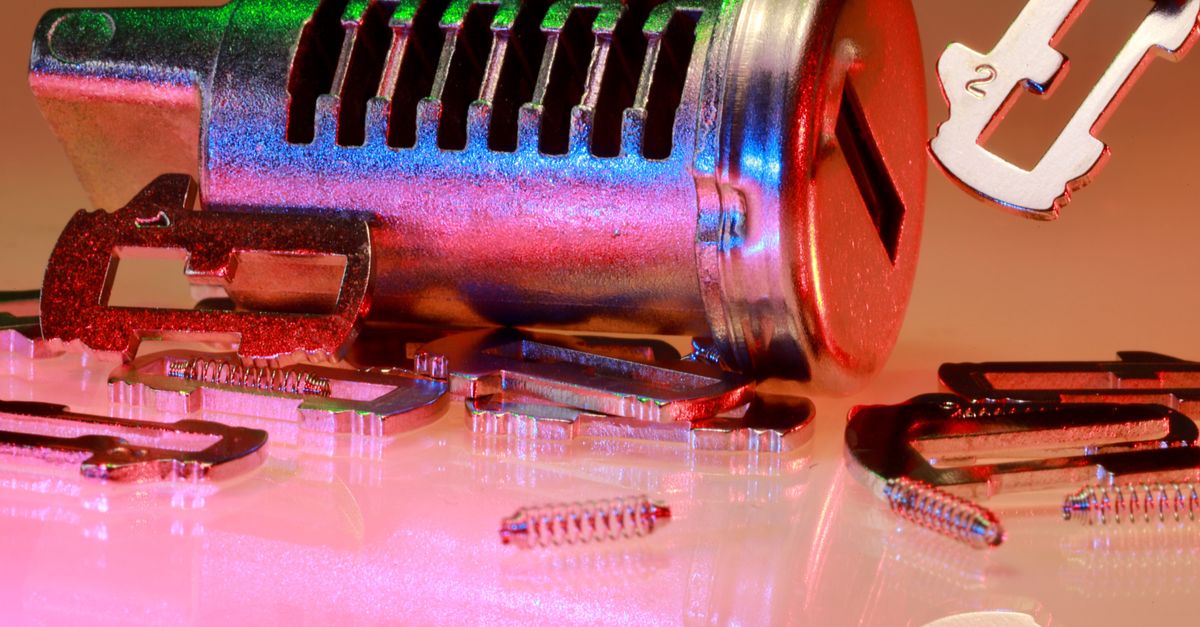
When a key snaps inside a cylinder, the temptation to probe at it with a bobby pin, a thin screwdriver, or needle-nose pliers is understandable — but it almost always makes the situation worse. Fragments get pushed deeper, keyway edges get scratched, and delicate wafer or pin stacks inside the cylinder can be displaced. Professional broken key extraction relies on purpose-built tools: hook picks sized for specific keyway profiles, extractor spirals that grip the key's cut edge without shoving it inward, and in some cases, plug-following equipment that allows a skilled technician to disassemble the cylinder without drilling. Our technicians are experienced in reading a keyway before inserting a single tool, which is what separates a clean recovery from a lock replacement bill.
The lock type matters enormously. A mortise lock — the rectangular body mortised into the edge of the door and operated by a separate cylinder — is mechanically more involved than a rim lock or a cylindrical knob lock. Mortise cylinders are found throughout Houston's commercial districts and historic residential neighborhoods, and their longer keyways can actually trap fragments more securely. A door knob lock on a standard residential passage door presents a different profile and a shallower cylinder, which sometimes allows for a more straightforward extraction but still demands care. Our technicians carry tooling for both, as well as for automotive ignition cylinders, padlocks, cabinet locks, and mailbox locks — the full range of situations a real Houston day can throw at you.